Moving Into a New Property in Dubai: Snagging, Handover and Move-In Checklist
Written and reviewed by the Reef Movers team — licensed movers and packers in Dubai. Last updated: October 2026.
Moving into a new property in Dubai feels exciting, but the order of steps matters. Many buyers rush from the key handover straight to the furniture. However, the days around handover decide who pays for each defect: the developer or you. This guide covers snagging, your defect rights, utilities, permits and a safe move-in plan.
We are Reef Movers, a Dubai moving company. We move families into new communities every season, so we know where delays start. The rules below come from published guides and official services. Check your own sale agreement, because terms differ between developers.
Key Takeaways
- The law does not require snagging, but most guides advise it strongly. Inspect before you sign the handover documents.
- Under Dubai Law No. 6 of 2019, developers are liable for structural defects for ten years and for installations for one year.
- Report defects in writing, and keep dated photos and a copy of the signed handover form.
- Activate DEWA and check community move-in rules before the truck arrives.
- Wait for major snag fixes before moving into a new property with furniture. Damage is harder to dispute later.
In This Guide
From Completion to Move-In: What Happens
The path from completion to move-in has several stages. The table shows the usual order for a new unit. However, your sale agreement may add or reorder steps.
| Stage | What happens |
|---|---|
| Final payment | The buyer pays the remaining instalments and handover fees, such as admin and registration costs. |
| Snagging inspection | You or an inspector check the unit and write a snag list. |
| Snag list submitted | The developer receives the list and agrees which defects it will fix. |
| Handover and keys | The developer issues the handover notice and keys once the list is agreed. |
| Utilities and permits | You activate DEWA and any other services, and arrange the community move-in permit. |
| Title deed | The developer completes registration, and your interim registration becomes a title deed. This can take weeks. |
What Snagging Is and Why It Matters
Snagging is a room-by-room inspection of a new home. It ends in a written list of defects, called a snag list. Dubai law does not require you to snag. However, inspecting before you sign gives you the strongest position.
Once you sign the handover form, you accept the unit in its current condition. So it is harder to argue about visible defects afterwards. A written, dated list shows that the developer knew about each defect from day one. That record can matter if a dispute follows.
Your Defect Liability Rights
Dubai Law No. 6 of 2019 sets two main liability periods for jointly owned property. The developer is liable for structural defects for ten years from the project completion certificate. It is also liable for one year for defective installations. These include electrical, mechanical and sanitary works. The year runs from handover to the owner.
Guides differ on small details, such as when the one-year period starts if you delay taking possession. So read the handover and acceptance clauses in your sale agreement. You can also ask the developer in writing, or contact the Dubai Land Department if a developer will not act.
So report new defects in writing as soon as you find them. Do not wait until the one-year period is almost over. This is general information, not legal advice.
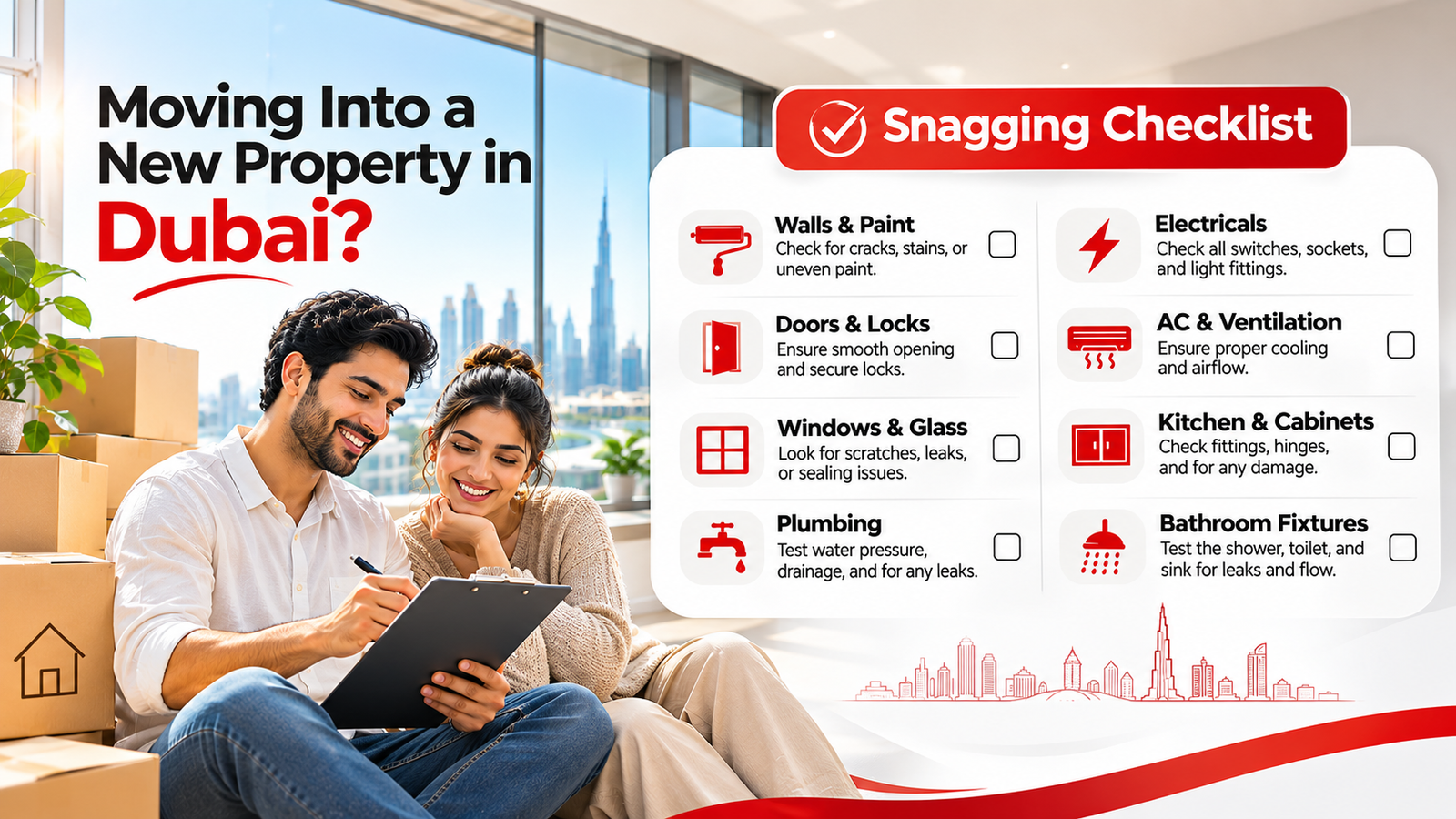
The Snagging Checklist, Area by Area
Work through the unit in a fixed order. Take a photo of every defect, and note its room and position.
- Doors and windows. Open and close every door and window, check the locks and look for gaps or misalignment.
- Walls, ceilings and paint. Check for cracks, uneven paint, stains and damp patches in every room.
- Floors and tiles. Walk every room and tap the tiles. Mark hollow, cracked or uneven tiles.
- Kitchen and joinery. Test cabinet doors, drawers, worktops and appliances.
- Bathrooms and plumbing. Run every tap and shower, flush every toilet and check the drains for leaks and slow flow.
- Electrics and the DB board. Test every socket and light, and check the distribution board labels.
- Air conditioning. Run each unit and check that it cools and drains properly.
- Balcony and exterior. Check railings, sliding doors, waterproofing and any shared areas visible from the unit.
So bring a torch, a socket tester, a tape measure and a phone with a good camera. If you prefer, hire a snagging inspector. They also know the common faults and write a formal report. Either way, submit your list to the developer in writing.
Your Handover-Day Checklist
Handover day moves fast, so prepare a short list. Then bring it with you, and do not sign until every point is clear.
- The handover form, and a signed copy for you.
- All keys, access cards, remote controls and parking tags.
- Meter readings for electricity and water, with photos.
- Warranty documents and appliance manuals.
- The snag list, with the developer’s written acknowledgement.
- Service charge details and the community rules.
- The name and number of the handover contact.
Take a final set of photos of each room before you leave. Then store everything in one folder, because you may need it later.
What to Put in a Snag Report
A clear report gets faster results because the developer can act on it quickly. Describe each defect in one line, and add the room and a photo. Then group the list by area.
- Location. Name the room and the wall, floor or fixture.
- Description. Say what is wrong, such as a cracked tile or a leaking tap.
- Photo. Attach a dated photo, and add a close-up when the detail is small.
- Priority. Mark safety and water issues as urgent.
Send the report by email, so you have a dated record. Then follow up in writing until the developer closes each item.
Common Snags in New Dubai Builds
- Hollow or cracked tiles. These are among the most reported defects.
- Paint problems. Look for patchy finish, runs and uneven sheen.
- Misaligned doors and windows. They may stick, leave gaps or not lock well.
- Air conditioning faults. A unit may run but not cool properly.
- Plumbing issues. Watch for leaks, slow drains and low pressure.
- Sealant gaps. Check around baths, sinks and windows.
- Countertop damage. Chips, stains and uneven joints are common.
Utilities and Permits Before Move-In
Activate your utilities early. DEWA asks for a refundable security deposit, currently AED 2,000 for apartments and AED 4,000 for villas. Owners usually need a title deed or handover documents and an Emirates ID. Confirm the exact list with DEWA, because requirements can change.
Some communities also use a district cooling provider, so ask your developer which services you need to register. Order internet early, because installation can take longer than the move.
Many communities require a move-in permit and a security notice for the truck. Ask the community management for its rules and lead times. Also check the service charge schedule, because the first bill often arrives soon after handover.
Planning for Moving Into a New Property
New buildings bring their own move-in challenges. Lifts may be new, and rules are often strict. Construction dust may still settle in the unit. So plan these steps. Good packers and movers in Dubai will lay floor protection without you asking.
- Clean first. Arrange a deep clean before furniture arrives.
- Protect new floors. Ask the crew to lay floor protection along the route.
- Time deliveries. Schedule furniture deliveries after snag fixes and cleaning.
- Book the lift. Reserve the lift and loading bay for a fixed time window.
- Use storage if needed. If repairs delay your move-in, store your items safely.
Our storage service can hold your furniture until the unit is ready. Our moving timeline guide also shows how long each home size takes.
A New-Property Move-In Timeline
Use this timeline when moving into a new property, and adjust it to your handover date. Any moving company in Dubai working in a new building should know the permit process.
| When | What to do |
|---|---|
| Before handover | Book the snagging inspection. Prepare your photo and note system. |
| Handover day | Inspect, submit the snag list in writing, and keep a signed copy. |
| Week 1 | Activate DEWA and internet. Ask about the community move-in permit. |
| Week 2 | Follow up on snag fixes. Arrange cleaning. |
| Before the move | Book movers and the lift. Confirm delivery dates for new furniture. |
| Move day | Protect floors, check items off, and note any new damage. |
| Within the first year | Report any new defects in writing, while the liability period runs. |
Moving Into New Communities
Moving into a new property in a new community often means gates, permits and phased handovers. We cover several of them in detail. Read our guides for Dubai Creek Harbour, Tilal Al Ghaf, Damac Hills and Dubai Hills Estate.
Choosing Movers for a New-Build Move-In
Choose a mover that understands permits and building rules. Then ask whether the crew protects new floors and lifts. Also ask how it handles delays if your snag repairs run late.
Reef Movers is a licensed and insured moving company in Dubai that gives written quotes before work starts. Different Dubai movers and packers handle new buildings differently, so compare them. When you compare packers and movers in Dubai, ask each one how it handles new buildings. Our movers and packers in Dubai team will plan around your permit, lift and delivery dates. Good Dubai movers and packers also hold your move date if the handover slips. However, they differ on floor protection and lift rules, so ask about both.
Frequently Asked Questions
What is snagging in Dubai?
Snagging is an inspection of a new home that produces a written list of defects. The developer then fixes the listed defects under its liability.
How long is a developer liable for defects in Dubai?
Under Dubai Law No. 6 of 2019, developers are liable for structural defects for ten years. They are liable for defective installations for one year.
Do I need a snagging inspection before handover?
The law does not require it, but most guides advise it strongly. Inspect before you sign, because signing means you accept the unit as it stands.
Can I move in before snagging is complete?
You can, but it is safer to wait. Once your furniture is in, repairs are harder to schedule and damage is harder to dispute.
What do I need to connect DEWA at a new property?
Owners usually need a title deed or handover documents and an Emirates ID. Tenants need an Ejari certificate. Check the current list with DEWA.
Related Reading
- Moving Timeline in Dubai: How Long Does a Move Take?
- Apartment Moving Checklist for Dubai (2026)
- Moving Companies in Dubai: The Complete 2026 Guide
- Home Relocation Services
Get a Free Move-In Quote → Call +971 50 337 9110 or WhatsApp us anytime.